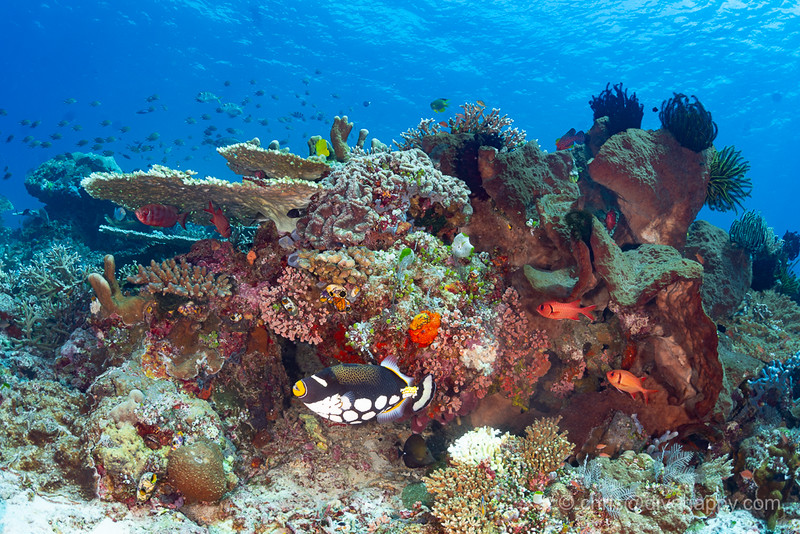
Komodo diving can feel like exploring two completely different underwater destinations in a single journey. In the north, divers often find clearer, warmer water, hard-coral reefs, energetic drifts, and large schools of fish. Head south and the mood changes: the water becomes cooler, visibility can drop, soft corals become more dominant, and manta rays and macro life take center stage. That contrast is exactly what makes Komodo National Park so exciting for divers who want variety rather than repetition.
One National Park, Two Underwater Personalities
Komodo National Park sits between Sumbawa and Flores and covers 219,322 hectares, according to UNESCO. The park includes Komodo, Rinca, Padar, and numerous smaller volcanic islands, while more than 130,000 hectares of its protected area are marine. Strong currents and an exchange of nutrient-rich water help shape its underwater ecosystems.
UNESCO notes that Komodo’s rich reefs and strong currents support a diverse marine ecosystem, including turtles, dolphins, whales, and dugongs. For divers, conditions can shift dramatically across relatively short distances.
A Komodo diving trip is therefore not simply about ticking off famous sites. It is about seeing how geography, temperature, currents, and nutrient flow influence what appears beneath the surface.
What Makes North Komodo Feel So Different?
North Komodo is known for clear water, vibrant reefs, and fast-paced dives. Wallacea reports visibility in the northern part of the strait reaching roughly 25–30 meters in good conditions. That clarity is ideal for wide-angle photography and for watching entire reef systems unfold.
Hard and soft corals mix across slopes, pinnacles, and walls, while anthias, wrasses, angelfish, reef sharks, tuna, and large predatory fish add movement above the reef. Current can be powerful, so many sites are best experienced as carefully timed drift or current dives.
This is where an experienced operator matters. A Wallacea Dive Cruise uses current checks and site timing before dives to help guides choose entry points and brief guests according to conditions.
For travelers comparing an Indonesian liveaboard with a resort stay, North Komodo demonstrates the advantage of mobility: a vessel can reposition between dive sites and respond to tides, rather than relying on a single fixed departure point.
Why Does South Komodo Feel Cooler and Wilder?
Travel south, and the character changes noticeably. Wallacea lists Komodo water temperatures between 22°C and 29°C, with southern temperatures capable of dropping to around 22–23°C in July and August. Visibility in the nutrient-rich south is often around 10–15 meters, below the clearest conditions in the north.
Yet lower visibility does not mean poorer diving. Nutrient-rich water supports abundant soft corals and contributes to the south’s distinctive atmosphere. Manta rays, pygmy seahorses, frogfish, reef sharks, and other macro subjects are among the marine life divers may encounter.
A Komodo diving liveaboard makes this contrast part of one journey. Moving between northern and southern areas allows divers to experience different environments without choosing only one side of the park.
For photographers, one day may focus on reef panoramas and pelagic action while another rewards slower observation of soft corals and small marine species. It is one reason diving in Indonesia is defined by regional diversity rather than a single signature experience.
North or South: Which Is Better for Your Dive Style?
Neither side is objectively better. Choose North Komodo if you enjoy clear visibility, energetic drifts, schooling fish, reef sharks, pinnacles, and wide-angle photography. Choose South Komodo if you prefer cooler water, soft corals, macro photography, manta encounters, and a moodier underwater landscape.
Divers who want to explore both should consider a Komodo liveaboard itinerary that covers multiple areas. A liveaboard vessel can make the contrast part of the experience, while a diving yacht provides flexibility to move between sites as conditions change.
When comparing the best Komodo liveaboard options, look beyond cabin design and vessel size. Ask which regions the itinerary covers, how guides check currents, what temperatures to expect, and how much flexibility exists to adjust the route.
Why Current and Timing Matter So Much
Komodo is famous for its current, which helps support productive reefs. Wallacea says its guides conduct current checks before dives and brief guests using current conditions. The same site can therefore feel very different depending on tide, current direction, and time of day.
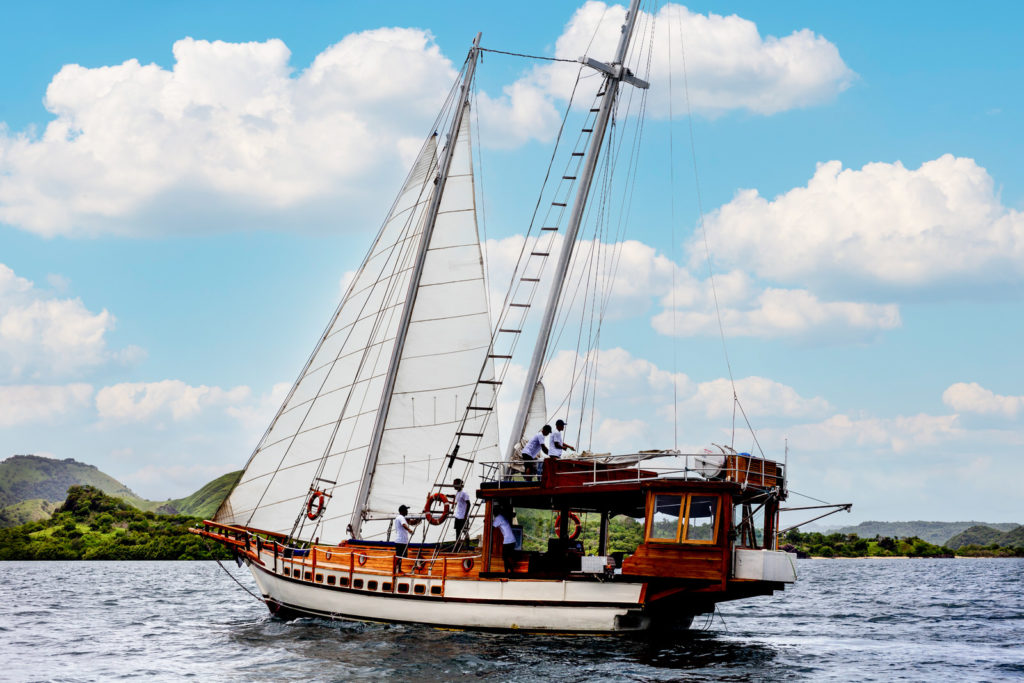
A Komodo boat tour can provide a snapshot of the park, but a multi-day itinerary gives divers more opportunities to experience changing conditions across regions. For underwater-focused travelers, route planning can matter as much as visiting famous landmarks.
How to Plan a Trip That Includes Both Regions
Start by checking seasonality, route, and trip length. Wallacea currently highlights June to September as its best season for Komodo itineraries and lists 10-night expeditions among its offerings. Natural conditions vary, so no itinerary should promise a specific wildlife encounter.
Ask whether the route includes North, Central, and South Komodo, and check expected temperatures before packing exposure protection. Divers should also be realistic about their experience with current. A reputable crew can plan around conditions, but comfort with drift diving improves the experience.
The strongest Komodo diving experiences are not about deciding whether north or south wins. They come from understanding why the regions differ and allowing enough time to experience both. Together, clear northern reefs and cooler southern ecosystems reveal how much underwater diversity can exist within a single protected landscape.